




Why evidence matters more than assumptions
For a long time, territorial decisions relied on representations assumed to be accurate. Models and plans described expected behavior that seemed stable. Over time, reality began to diverge from those assumptions across natural, built, and operational systems.
Unexpected floods, premature infrastructure failures, and unanticipated urban growth revealed growing gaps. The territorial system no longer behaved as represented. Evidence started to contradict the model.
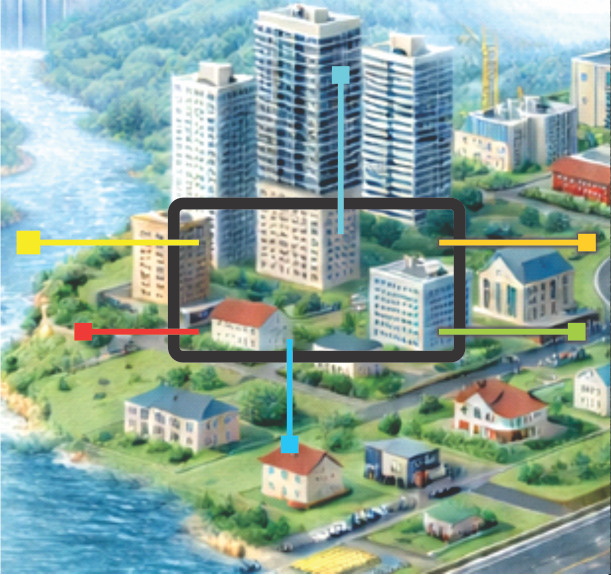
Sensing and monitoring appear when reality is allowed to actively test the system. Sensors, inspections, measurements, and operational data validate not only assets, but also how integrated processes perform in practice. Through monitoring, systems regain their ability to learn.
Without monitoring, processes continue executing even when their assumptions are no longer valid. Decisions rely on models that age silently. The system keeps operating, but with diminishing learning capacity.
Monitoring does not eliminate uncertainty. It reduces institutional blindness and restores feedback between decisions and outcomes across the territorial system.
One territory. Five layers.
See how reality reconnects digital systems with governance.
-
Previous: Time Enters the System
-
Conceptual reference: TwinGEO Layers – Sensing & Monitoring