
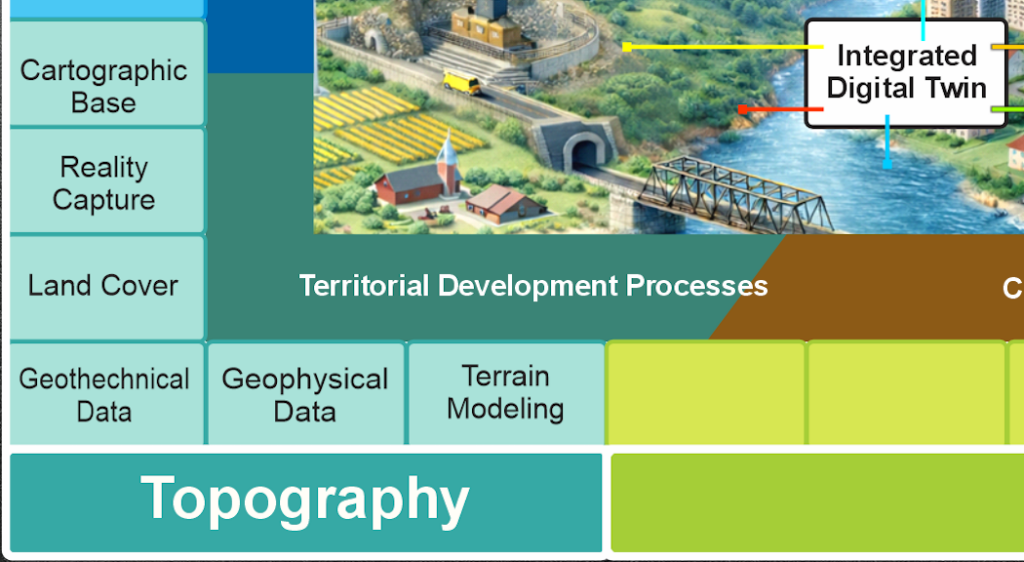
Why governance fragmentation starts long before digital systems
The city emerged around a river, fertile land, and a natural crossing point long before any formal governance structure existed. Early settlement responded to physical opportunities rather than plans, regulations, or administrative boundaries. The territory functioned as a system before it was ever governed as one.
As growth accelerated, institutions appeared to address specific problems such as land regulation, water management, mobility, and urban expansion. Each defined its own scope and logic, carving the same physical space into separate administrative realities. What physically remained a single territory became institutionally fragmented.
This fragmentation was not a mistake, but a historical response to concrete governance needs. The problem emerged when these institutional boundaries began to operate as if they were independent systems. The territory stopped being understood as a whole and started being managed as disconnected parts.
Today, many territorial conflicts do not arise because the territory has changed in essence. They arise because governance operates through implicit, overlapping, and sometimes contradictory domains. When domains are not made explicit, digital systems inherit fragmentation instead of resolving it.
A domain is not a digital layer or a cartographic theme. It is a political and functional definition of the system being governed, its purpose, and the institutional logic that sustains it. Without explicit domains, digital transformation lacks direction.
One territory. Five layers.
Explore how territorial systems evolve toward decision-ready Digital Twins.
-
Next insight: When Territory Begins to Be Recognized
-
Conceptual reference: TwinGEO Layers – Domains